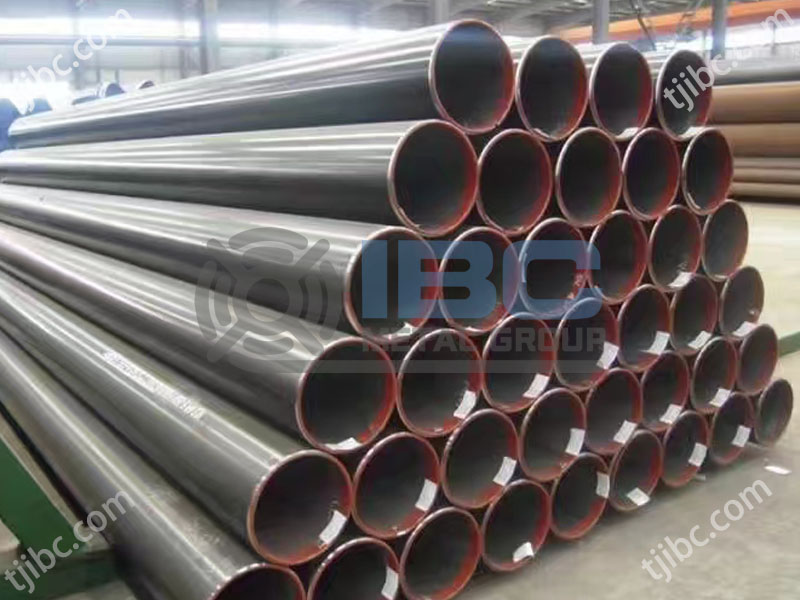
After a German water treatment plant replaced ERW pipes with HFI pipe systems in 2023, their maintenance logs showed a 67% reduction in weld-related leaks within six months. This real-world success highlights why engineers increasingly specify high-frequency induction welding for critical fluid transport.
Unlike conventional electrode-contact welding, HFI technology uses electromagnetic induction to heat steel edges to 2,500°F (1,370°C) without physical contact. This contactless process eliminates copper contamination and oxide formation at the weld seam – the primary failure point in ERW pipes.

Metallurgical analysis confirms HFI welds maintain 98-99% of base metal purity, critical for corrosion resistance.
HFI Welding Chemistry & Performance
The absence of electrode contact preserves the steel’s original composition. This table compares key properties of ASTM A135 Grade A HFI pipe versus conventional ERW:
| Property | HFI Pipe | ERW Pipe |
| C (Carbon) | 0.18% max (base metal) | 0.18% + 0.05% contamination |
| Weld Oxide Content | 0% | 2.1-3.5% |
| Yield Strength | 42 ksi (290 MPa) | 38 ksi (262 MPa) |
| HAZ Width | 0.3-0.5mm | 1.2-2.0mm |
Source: AWS Welding Handbook Vol. 4 (2023 Edition)
In gas pipeline applications, HFI pipe demonstrates superior performance. Field data from Canadian transmission systems shows HFI joints withstand cyclic stress loads 3.2 times longer than ERW equivalents before micro-fracture initiation. This stems from the seamless-like metallurgical bond achieved through precise thermal control.
Water infrastructure projects benefit uniquely from HFI technology. When a Milwaukee brewery installed HFI tubing for CIP (Clean-in-Place) systems, their sanitation validation tests detected zero ferric oxide at weld zones.

The non-porous weld seam prevents bacterial colonization – a decisive advantage over ERW in potable water systems per NSF/ANSI 61 standards.
Modern HFI mills now achieve welding speeds exceeding 120 m/min while maintaining consistent penetration. Advanced inline eddy-current systems perform 100% weld integrity checks, rejecting pipes with even 0.1mm flaws. This manufacturing precision explains why HFI tubes meet strict API 5L PSL2 requirements for sour service pipelines.
HFI Pipe Welding does face limitations in ultra-thick walls (>12mm), where submerged arc welding remains preferable. However, for common water/gas lines in 1/2″ to 24″ diameters, HFI technology delivers the optimal balance of corrosion resistance, strength, and cost efficiency.
Contact with us today!