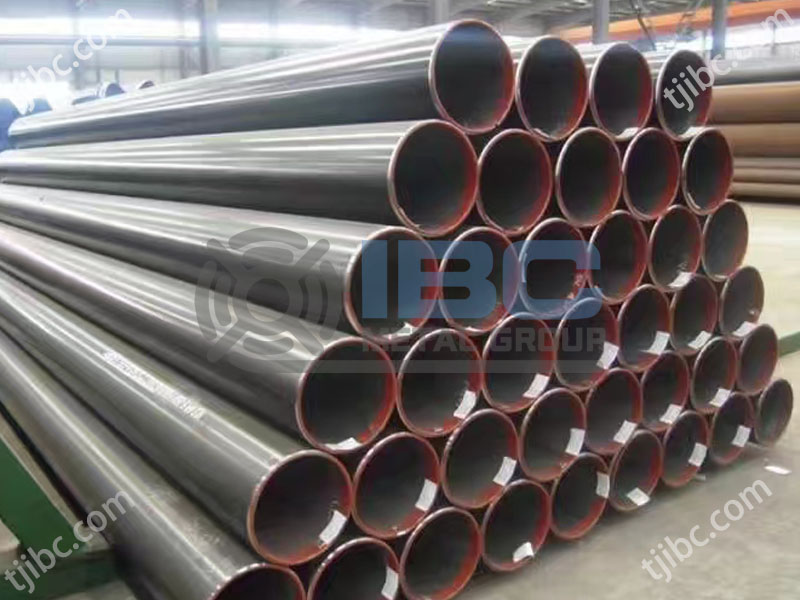
The global energy infrastructure relies on the integrity of its pipelines, and the material chosen forms the foundation of that reliability. API 5L X42/L290 pipeline steel represents one of the most commonly specified grades for a wide array of onshore and offshore projects due to its excellent balance of strength, weldability, and cost-effectiveness. This article provides a detailed overview of the key API 5L X42/L290 pipeline steel properties, offering a clear guide for engineers, project managers, and procurement specialists. Understanding these characteristics is essential for selecting the right material to ensure safety, durability, and efficiency in pipeline operations. At IBC Group, we supply high-quality API 5L steel plates that meet these rigorous standards, supporting critical infrastructure projects worldwide.
Chemical Composition: The Foundation of Performance
The performance of any steel grade is fundamentally dictated by its chemical composition. For API 5L X42/L290, the chemical makeup is carefully balanced to achieve the required mechanical properties while maintaining excellent weldability and toughness. The grade features a carbon-manganese base with carefully controlled levels of microalloying elements. Key components include carbon and manganese, which provide foundational strength and hardenability.

Elements like silicon aid in deoxidation during the steelmaking process, while phosphorus and sulfur are maintained at low levels to preserve toughness and resist cracking. The controlled chemistry ensures a low carbon equivalent (CE). It is a critical factor in preventing cracking during the welding process. This makes the material exceptionally suitable for field welding and fabrication, a non-negotiable requirement for pipeline construction. The consistent chemical composition is what allows the API 5L X42/L290 pipeline steel to deliver predictable and reliable performance under various environmental stresses.
The material is available in a wide range of dimensions to suit different project requirements, from large-diameter transmission lines to smaller distribution networks. IBC Group provides comprehensive sizing options to meet precise specifications.
| Parameter | Details & Available Specifications |
| Standard | API 5L PSL1 / PSL2 |
| Grade | X42 (Metric Designation: L290) |
| Yield Strength | ≥ 290 MPa (42 ksi) |
| Tensile Strength | 415 – 755 MPa (60 – 110 ksi) |
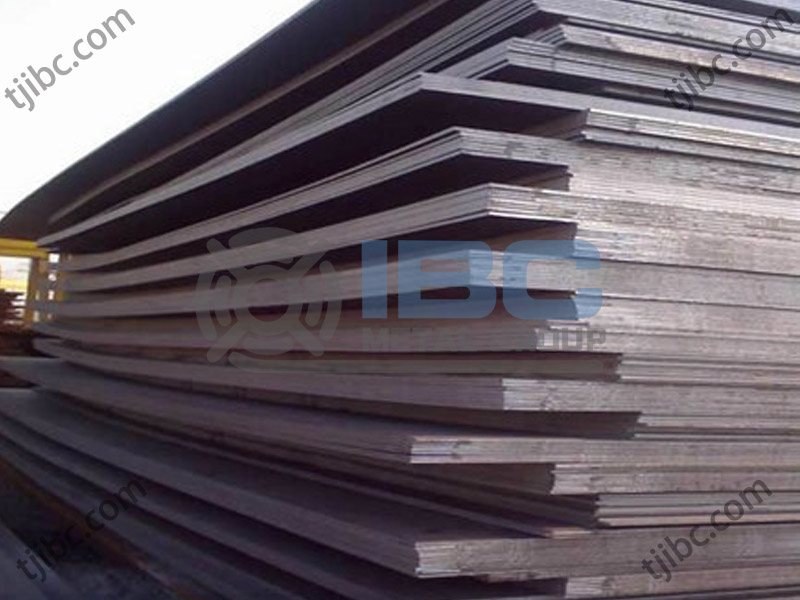
| Available Forms | Steel Plate (for LSAW Pipe), Skelp (for SSAW/ERW Pipe) |
| Plate Thickness | 6 mm to 40 mm (PSL1), and wider ranges for PSL2 |
| Plate Width | Up to 3,800 mm for wide heavy plates |
| Length | Custom cut-to-length, typically up to 12 meters |
| Delivery Condition | As-rolled (AR), Normalized (N), or Thermo-Mechanical Controlled Processing (TMCP) |
Mechanical Properties and Key Characteristics
The defining API 5L X42/L290 pipeline steel properties are its mechanical capabilities. This ensures the pipe can withstand operational pressures, external loads, and environmental factors. The minimum yield strength of 290 MPa (42 ksi) and tensile strength ranging from 415 to 755 MPa provide a robust margin of safety for transporting oil and gas. Beyond mere strength, the material’s true value lies in its toughness and ductility.

Charpy V-Notch impact testing requirements, especially for PSL2, guarantee that the steel can absorb significant energy and resist fracture propagation, even in low-temperature environments. This combination of strength and toughness prevents catastrophic failures and ensures long-term structural integrity. Furthermore, the steel must pass rigorous flattening, bend, and hydrostatic tests that validate its formability and pressure-containing capability during and after the pipe manufacturing process. These properties make L290 steel an economical and reliable choice for numerous applications.
Global Applications and Project Excellence
The balanced properties of API 5L X42/L290 pipeline steel make it suitable for a diverse range of applications. It is extensively used in gathering lines that transport raw materials from wellheads to processing facilities, as well as in long-distance transmission pipelines for natural gas and crude oil. Its good weldability and strength also make it a preferred choice for distribution networks within industrial plants and for water injection lines in offshore platforms. The reliability of this grade has been proven in countless projects across varied terrains and climates.
IBC Group has been a trusted supplier of API 5L X42/L290 steel plates for major infrastructure developments in countries like Ecuador and Mexico. Our clients in these regions have consistently reported high satisfaction with the material’s consistent performance, excellent dimensional accuracy, and the seamless logistical support we provide, which contributes significantly to on-time project completion.
Conclusion: The Benchmark for Reliability
API 5L X42/L290 remains a benchmark grade in the pipeline industry for good reason. Its carefully engineered chemical composition and guaranteed mechanical properties provide an optimal blend of strength, weldability, and toughness for a multitude of pressure vessel and pipeline applications. For project planners and engineers, selecting this grade means choosing a proven, cost-effective, and reliable material.

When sourcing this critical material, partnering with a certified supplier like IBC Group ensures you receive product that fully complies with API 5L standards, backed by the technical expertise and global supply chain capabilities necessary to support your project from the mill to the jobsite, anywhere in the world.
Contact with us today!