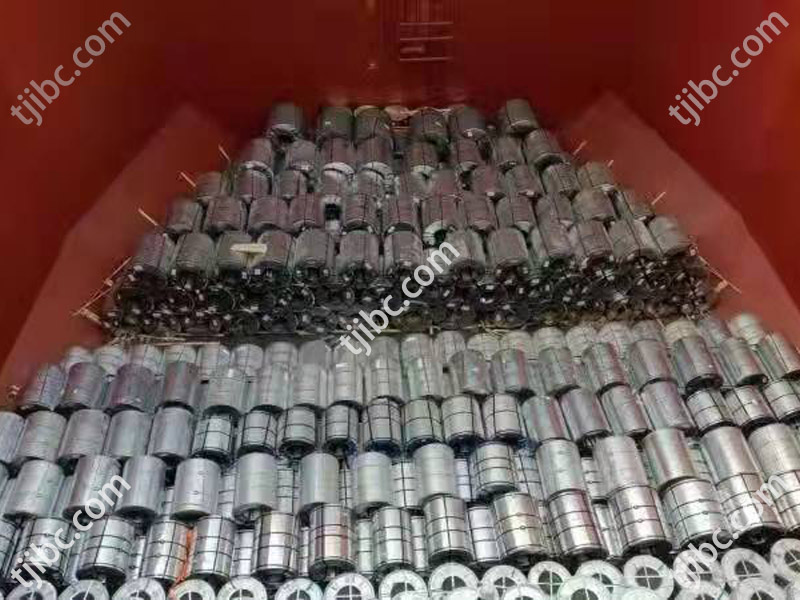
At IBC Group, we recently supplied a significant quantity of hot-dip galvanized SS400 Z purlins for a large-scale logistics warehouse project in Egypt. This client needed a robust solution to combat the region’s high humidity and saline air, which aggressively attack structural steel. The cornerstone of their design was superior Z purlin corrosion protection to guarantee decades of maintenance-free service. The specific sections supplied, known for their excellent strength-to-weight ratio, included industry-standard sizes such as 200x60x2.0mm, 250x75x2.5mm, and 300x85x3.0mm, all conforming to relevant international dimensional tolerances.
| Depth (mm) | Flange Width (mm) | Thickness (mm) | Sectional Weight (kg/m) | Standard Length (m) |
| 200 | 60 | 2.0 | 5.02 | 6 to 12 |
| 200 | 70 | 2.2 | 5.98 | 6 to 12 |
| 250 | 75 | 2.5 | 8.29 | 6 to 12 |
| 250 | 82 | 2.5 | 8.67 | 6 to 12 |
| 300 | 85 | 3.0 | 11.55 | 6 to 12 |
Understanding the Corrosion Challenge for Structural Members
Steel structures, particularly those employing lighter gauge sections like Z purlins, face constant threat from environmental factors. Moisture, oxygen, and atmospheric contaminants like chlorides or industrial pollutants initiate an electrochemical process that leads to rust. This corrosion compromises the structural integrity by reducing the effective cross-sectional area of the steel, potentially leading to catastrophic failure if left unchecked.
The challenge is not just to design for immediate load-bearing capacity but to implement a long-term strategy that preserves that capacity throughout the structure’s intended lifespan. This makes the choice of protection system a critical economic and safety decision.
Evaluating Protective Coating Methodologies
Several methodologies exist to shield steel from degradation, each with varying degrees of effectiveness and application complexity. Standard paint systems offer an initial barrier but are prone to damage during handling and installation.

Scratches and imperfections become initiation points for corrosion underneath the coating, requiring frequent and costly maintenance cycles. Electro-galvanizing, or electroplating, applies a thin layer of zinc through an electrical process. While it provides a uniform appearance and some level of sacrificial protection, the coating thickness is often insufficient for long-term exposure in demanding environments, making it a less robust solution for permanent structures.
The Superiority of the Hot-Dip Galvanizing Process
The hot-dip galvanizing process remains the industry gold standard for robust Z purlin corrosion protection. This method involves meticulously cleaning the steel to remove all mill scale and impurities before immersing it in a bath of molten zinc. A metallurgical reaction between the iron in the steel and the zinc creates a series of zinc-iron alloy layers, topped by a pure zinc outer layer.
This bonded coating is uniquely resilient, providing a dual defense mechanism. It acts as a physical barrier against the elements, while the zinc also serves as a sacrificial anode, meaning it will corrode preferentially to the underlying steel, even if the coating is scratched. This cathodic protection is what grants hot-dip galvanized sections their legendary durability.
Ensuring Long-Term Performance and Structural Integrity
Selecting hot-dip galvanizing is the most effective step toward ensuring longevity. The longevity of the protection is directly influenced by the thickness and quality of the zinc coating, which is itself a function of the steel’s chemistry and the process parameters. Steel grades like SS400 are well-suited for this process due to their compatible silicon content, which promotes the formation of a thick and adherent coating.

Furthermore, proper handling and installation practices are paramount. While the galvanized coating is tough, care must be taken to avoid deep abrasions. Any cut edges or areas where the coating is damaged during installation should be touched up with a high-zinc-content paint to restore the complete protective system and maintain the material’s designed lifespan.
Contact with us today!