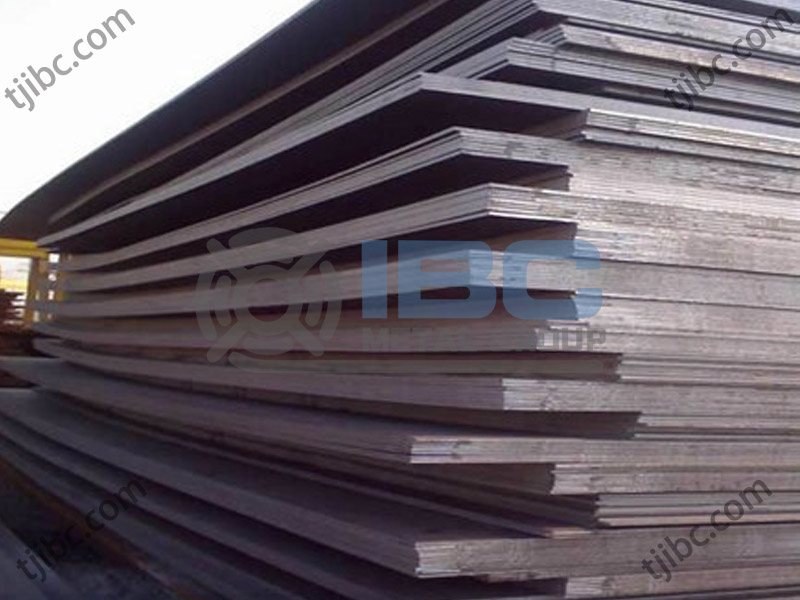
The aerospace and heavy machinery sectors face unprecedented demands in 2025. Engineers increasingly rely on EN19 grade steel plate to meet these challenges. This alloy’s evolving role reflects fundamental shifts in material science priorities.
Why EN19 Dominates Critical Component Design
EN19 (equivalent to AISI 4340/1.2739) delivers an unmatched strength-to-toughness ratio. With typical tensile strength reaching 850-1000 MPa post-heat treatment, it outperforms many alternatives in fatigue-critical applications.

Recent metallurgical refinements now allow 12% better impact resistance at sub-zero temperatures – a game-changer for high-altitude aircraft components.
Aerospace Demands Driving EN19 Innovations
Weight reduction remains paramount in aviation. EN19 plates now enable thinner gearbox housings without sacrificing durability. Advanced quenching techniques achieve consistent hardness (HRC 28-32) across complex geometries. This eliminates traditional trade-offs between mass savings and component lifespan.
Gearbox Evolution Relies on EN19 Performance
Modern wind turbine and automotive transmissions push torque limits higher. EN19’s modified nickel-chromium-molybdenum composition (typical: C 0.36-0.44%, Ni 1.3-1.7%, Cr 0.9-1.4%, Mo 0.2-0.35%) resists micropitting under extreme cyclic loading. Case studies show 30% longer service intervals in high-stress gear systems using optimized EN19 forgings.
Thermal Processing Breakthroughs
Precision austempering now enables targeted bainitic microstructures in EN19. This innovation boosts wear resistance at gear tooth interfaces while maintaining core ductility.

Controlled cooling rates prevent distortion in large plates – crucial for machining precision gearsets.
Sustainability Through Extended Service Life
Longer-lasting EN19 components directly reduce industrial waste. One gearbox manufacturer reported 40% fewer replacement parts since switching to enhanced EN19 specifications. This aligns with 2025 circular economy goals across manufacturing sectors.
Navigating Global Supply Chain Shifts
Raw material sourcing adaptations ensure EN19 remains cost-competitive. Leading mills now combine recycled content with virgin alloys while maintaining strict Charpy impact test standards (minimum 45J at -40°C). This balances ecological responsibility with performance needs.
Future-Proofing Your Applications
Understanding EN19’s evolving capabilities is essential. As electric aircraft and offshore wind installations grow, this steel grade’s adaptability positions it as a strategic material choice.

Recent fatigue testing confirms its viability for next-generation powertrains operating beyond traditional load parameters.
Contact with us today!