The Evolution of Nuclear Power Station Piping Systems
Nuclear energy faces unprecedented demands as next-gen reactors push operational limits. Fourth-generation designs and small modular reactors (SMRs) require piping systems capable of withstanding 600°C temperatures and 25MPa pressures – conditions that traditional materials struggle to endure. This technological pivot drives material science innovations specifically for nuclear power station pipes.

The industry’s shift toward nickel-chromium superalloys represents more than incremental improvement; it’s redefining safety paradigms for primary coolant loops and steam generator systems. Recent IAEA reports confirm that material failures in piping account for 23% of nuclear component-related incidents globally, highlighting the critical need for advancement.
Material Science Breakthroughs
Alloy 690TT now leads the evolution of nuclear-grade piping solutions. This thermally treated nickel-chromium alloy delivers 40% superior stress corrosion cracking resistance compared to legacy 316L stainless steel according to EPRI validation studies. The secret lies in its optimized microstructure – chromium carbides precipitate along grain boundaries during thermal processing, creating barrier defenses against corrosive reactor chemistries.
When IBC Group tested Alloy 690TT pipes under simulated Gen-IV reactor conditions, they sustained over 100,000 thermal cycles without microcrack initiation. These performance metrics explain why leading projects like TerraPower’s Natrium reactor specify this material for their primary circuits. Such innovations directly address the nuclear industry’s most persistent challenge: maintaining integrity under simultaneous radiation, thermal stress, and pressure fluctuations.
Standards Revolution
Global safety codes now mandate these advanced materials. The 2024 ASME Boiler and Pressure Vessel Code Section III update explicitly qualifies Alloy 690TT for nuclear power station pipes in reactors exceeding 500°C service temperatures. This regulatory shift follows decade-long testing at Argonne National Laboratory, where researchers documented the alloy’s neutron irradiation resistance at 70 dpa (displacements per atom) – triple the tolerance of conventional steels.

Meanwhile, the European RCC-M standard now includes revised Appendix Z for fourth-generation reactor piping, requiring full-section ultrasonic testing and enhanced traceability protocols. These standards don’t just govern new builds; they’re driving retrofits of existing plants where original carbon steel piping approaches end-of-life. Utilities now prioritize these upgrades after MIT’s 2023 study revealed that material-enhanced pipes reduce unplanned outages by 17%.
Real-World Implementation
The PIP-II particle accelerator project at Fermilab demonstrates these technologies in action. Engineers selected Alloy 690TT seamless pipes for its cryogenic-to-high-temperature transition zones, where thermal stress exceeds 450 MPa during operation. What makes this installation unique is the integr ation of additive-manufactured transition fittings, eliminating traditional welds in high-fatigue areas.
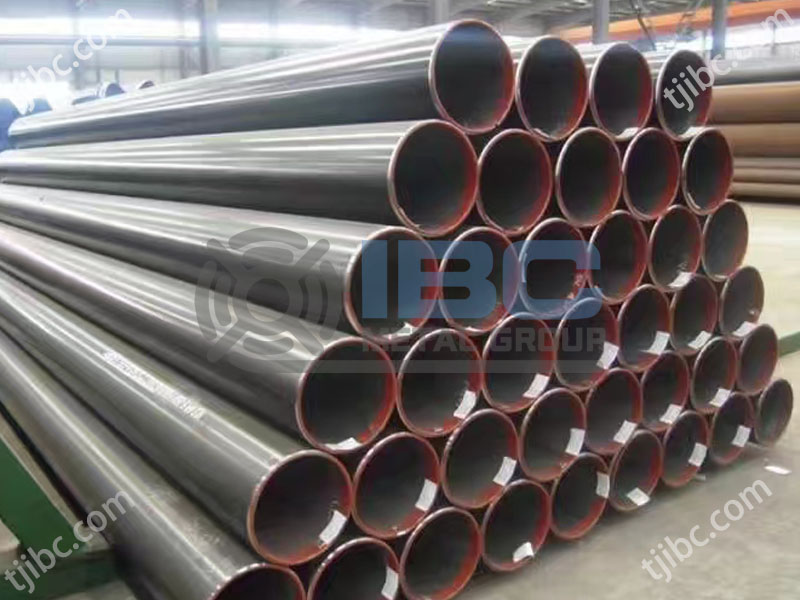
Rolls-Royce SMR takes this further by developing full-section 3D-printed nuclear power station pipes with embedded sensors. Their prototype monitors wall thinning in real-time using ultrasonic transducers printed within pipe walls – a breakthrough that could eliminate manual inspections in radioactive zones. These innovations converge toward one goal: extending pipe service life beyond the 60-year plant operational horizon while reducing human intervention in hazardous environments.
The Road Ahead
Additive manufacturing will dominate future nuclear pipe development. ORNL’s recent research successfully printed pressure-retaining piping components with controlled crystallographic orientation, achieving 98% density and superior creep resistance. The next frontier involves graded materials – pipes with varying alloy compositions along their length to match localized stress profiles.

Siemens Energy already prototypes such designs for SMR steam generators. As these technologies mature, expect tighter integration between material science and digital twins. Real-time strain monitoring combined with AI-powered predictive models will transform maintenance from scheduled outages to condition-based interventions. For nuclear operators, this means unprecedented operational flexibility without compromising the zero-failure tolerance that defines the industry.
Contact with us today!