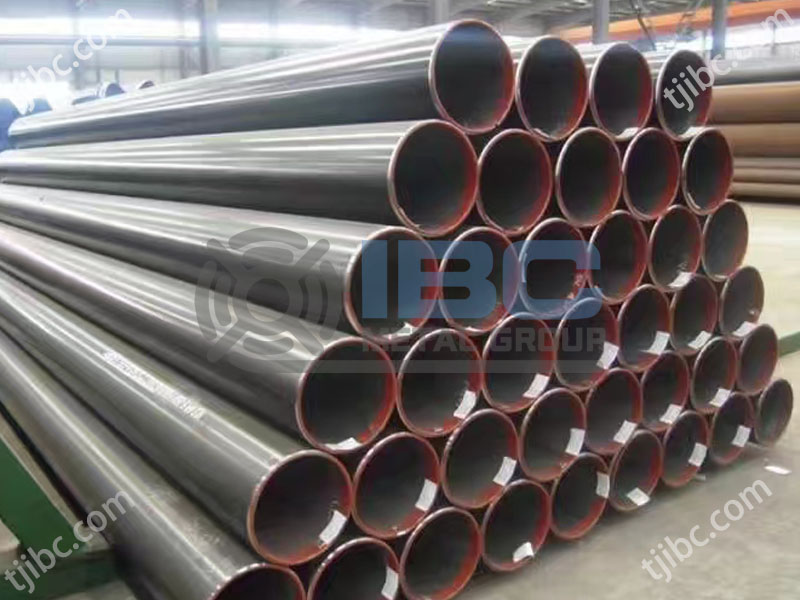
When specifying pressure equipment tubing for boilers, heat exchangers, or air preheaters, EN 10216-1 non-alloy steel pipes stand as a critical European standard solution. These seamless tubes deliver reliable performance in demanding thermal applications, but selecting the optimal grade and supplier requires careful technical consideration. This guide cuts through the complexity to help engineers and procurement specialists make informed decisions.
Understanding the Standard’s Core Purpose
EN 10216-1 covers seamless steel tubes for pressure purposes, specifically non-alloy quality steels with specified elevated temperature properties. It defines strict requirements for chemical composition, mechanical strength (tensile/yield), and technological tests like flattening, flaring, and impact toughness.

Tubes under this standard commonly serve in boiler water walls, superheaters, economizers, and air preheater bundles – environments where failure isn’t an option. The key grades include P195TR1/TR2, P235TR1/TR2, and P265TR1/TR2, with TR2 indicating higher testing rigor.
Matching Material to Application Demands
Not all EN 10216-1 pipes perform equally across scenarios. For boiler water tubes handling moderate temperatures (<350°C), P195TR1 often suffices, balancing cost and weldability. Superheater sections facing 450-550°C demand P265TR2 for its sustained creep strength.
Meanwhile, P235TR2 strikes a versatile balance for economizers and air preheaters resisting corrosion under cyclic stresses. Always cross-reference design pressure, peak operating temperature, and corrosion risks against the grade’s certified properties. Ignoring service conditions risks premature tube failures or unnecessary overspending.
Critical Properties Beyond the Certificate
While mill test reports validate compliance, practical success hinges on three often-overlooked factors:
- Consistent high-temperature strength: Verify tensile values at actual operating temps, not just room temperature.
- Weldability: Lower carbon grades (P195/P235) simplify on-site repairs.
- NDT coverage: Ensure ultrasonic testing covers full tube length, especially for TR2 grades in critical zones like superheater bends.

Reputable suppliers provide detailed test documentation tracing each batch’s journey from melt to final inspection. Never compromise on traceability.
Supplier Selection: More Than Just Price
Choosing the right EN 10216-1 pipe vendor involves technical due diligence:
1. Certification proof: Demand valid EN 10204 Type 3.1/3.2 certificates.
2. Production expertise: Mills experienced in hot-finished seamless tubes yield better dimensional consistency.
3. Testing capabilities: Confirm in-house hydrostatic, ultrasonic, and mechanical testing facilities.
4. Industry references: Ask for case studies in power generation or boiler manufacturing.
A technically rigorous supplier proactively flags potential fit issues – like recommending P265TR2 over P235TR1 for high-pressure headers – preventing costly redesigns later.
Why Technical Precision Matters
In a thermal power plant, specifying P195TR1 instead of P265TR2 for superheater tubes could lead to creep rupture within months. Conversely, over-specifying P265TR2 for low-temperature condensate lines wastes capital. Matching the EN 10216-1 grade precisely to operating envelopes ensures decades of safe, efficient service. Partner with suppliers who offer technical guidance, not just transactional sales.

Final Checklist Before Ordering
Confirm operating pressure/temperature extremes
Verify required grade (P195/P235/P265) and test category (TR1/TR2)
Validate non-destructive testing scope
Review mill certification templates
Audit supplier quality management systems
Contact with us today!